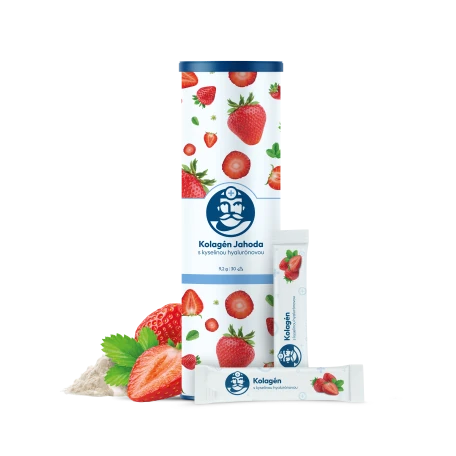
















Collagen is essentially a protein that the human body can produce itself, as it is essential for the proper functioning of cartilage, glands, joints, bones, muscles and skin. It is the most abundant substance in our body (up to 3%). Unless you are on social media, you really need to depend on it until you suddenly start to feel pain in your tendons, knees, ligaments... If you have a proper, balanced diet and get enough exercise, your body will produce very little of it. But...
With each lifetime, up to 1% of most of it is lost from the human body, and the older we get, the more years we can make it in our bodies. So with today's way of eating and sitting behind various monitors, it can start to get serious for us as early as our 30s. The other extreme is athletes who can destroy their ligaments and joints after just a few years of activity. That's why it's so popular today and there are a number of products that offer you different forms. It is difficult to choose.

What you need to know is that you can only use it properly in your body if you have enough vitamin C. Not only does it contribute to its production, but it is also essential for its utilisation in the human body. This is also supported by alpha and polyhydroxy acids (e.g. hyaluronic acid). Given today's lifestyle and especially the food we eat, taking it as a dietary supplement is a sensible decision. It is clear that nowadays, when you are exposed to advertisements for medicines, vitamins and dietary supplements 24 hours a day, it is natural to start taking extra tablets. But it is good to be aware of these facts when you need to help your body recover from poor lifestyle choices, a sports injury or simply old age...
An interesting part of today's story is influenced by ageing and skin damage. Back in 2013, a study was conducted on 69 women aged 35-55. They were divided into three groups and given different doses (2.5 grams and 5 grams, the third group received a placebo) over a period of 8 weeks. The results were visible after the first 4 weeks, but at the end of the experiment, they had rather heavier, more elastic skin (7%). The device used to measure skin elasticity is called a Cutometer. Further research was conducted years later in 2015, which again confirmed that supplementation (use) resulted in the first type (these different types resulted in a reduction of 27) and managed to increase the number of targets in the target (twice) detected, measurable.
And that's how the whole hype around collagen as we know it today came about. Collagen is everywhere and there is no social media (Facebook, Instagram, Tik-Tok...) where you won't come across various forms of collagen. You need to consider whether you'll believe an influencer who promotes collagen on Monday, dog food on Tuesday and a pill to miraculously cure hangovers on Friday. Or do you go and buy a supplement somewhere that is really professional, without sensational slogans ("I've been rejuvenated in 14 days", "my knees don't hurt after the third dose")...
It's up to you. Consider whether you necessarily need collagen as a supplement at all if you are only 16 years old. It's certainly a great supplement, unfortunately in today's modern age few people make enough of it naturally. For the rest of us, there are reputable sellers.